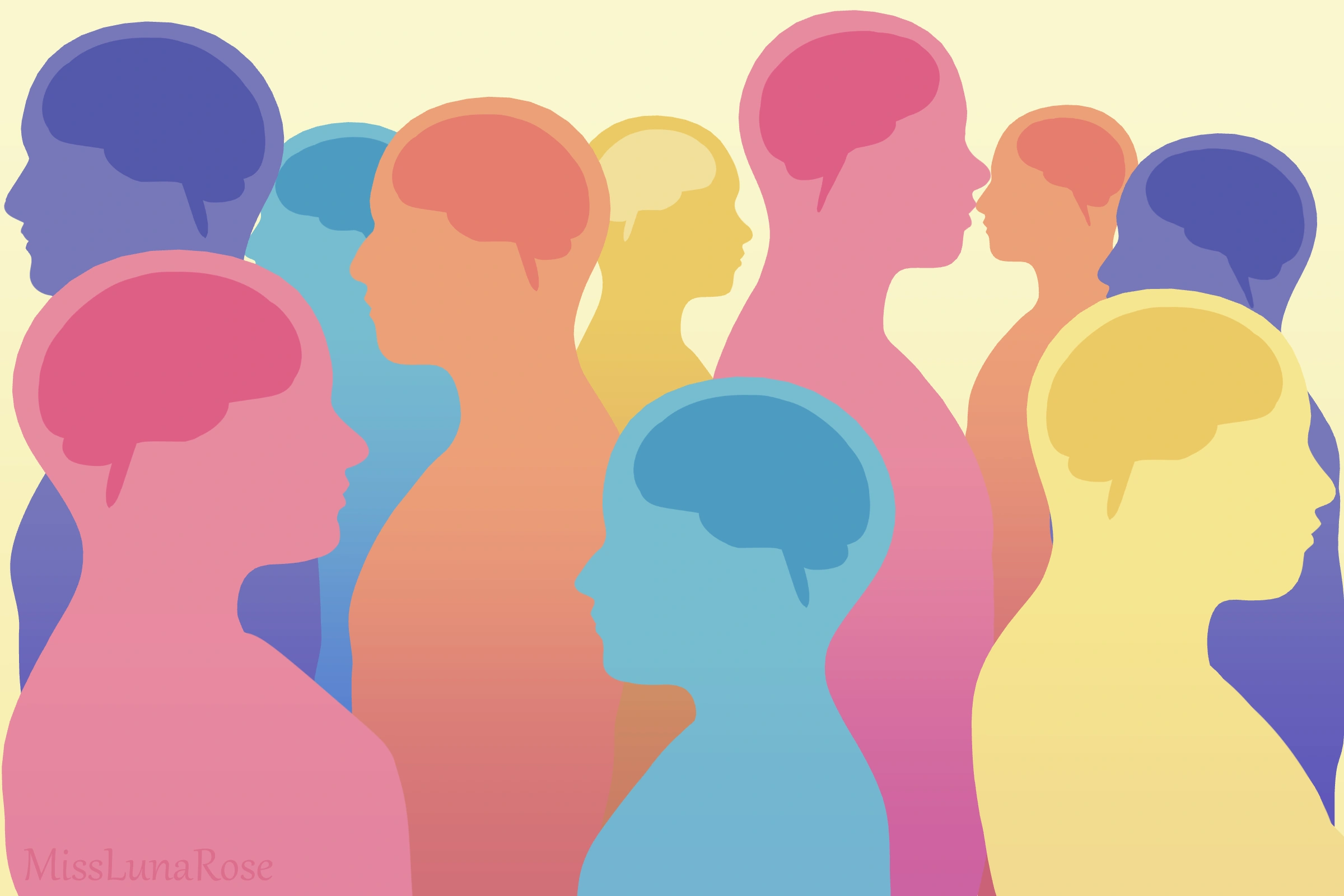

Art by autistic artist MissLunaRose
Neurodiversity refers to the natural diversity of human brains.[1] There is no single "normal" brain. Instead, humans have a variety of thinking styles, experiences, perspectives, and more. Conversations about neurodiversity focus on types of "neurodivergence" including ADHD, autism, learning disabilities, and more.
An Institution of Engineering and Technology report found that around 1/5 of engineering community members were neurodivergent.[2] Many of their biggest problems came from colleagues' lack of understanding and support.[2] An inclusive environment can help ensure that these engineers have good experiences and their talents aren't wasted.
Neurodivergent engineers
| “ | The way I organize my thoughts and the way I approach a problem is very, very different from a lot of my peers. |
| —Charlotte Fuqua, chemistry PhD student with ADHD[3] | |
Traditionally, people take deficit-based views of neurodivergence.[4] However, thinking differently can come with major strengths.[4] Organizations benefit from hiring neurodivergent people, bringing diverse skills to their teams.[5]
Some neurodivergent people identify as disabled, while others are uncomfortable with the term.[6][7]
Neurodivergent engineers may hesitate to openly discuss their neurodivergence. It could feel risky, and they may worry about being judged or treated badly.[8] Some try to "mask" their difficulties and appear more like everyone else, but this can be exhausting and it often hurts their mental health.[3][9]
Types of neurodivergence
Since neurodivergence is a broad umbrella term, it includes many different brain types. Here are some examples of common types of neurodivergence and what they can look like:
- Autistic engineers may speak directly, prefer to work alone, speak with unusual pitch or tone of voice, and struggle with social rules (e.g. figuring out when it's their turn to speak in a conversation). Their body language may include avoidance of eye contact, fidgeting, and atypical facial expressions. They may need routine, be extra sensitive to sensory input, and get too overwhelmed to think straight sometimes.[10] Common strengths include attention to detail, pattern recognition, creativity,[11] and productivity.[10]
- Dyspraxic engineers may be clumsy and can struggle with motor skills and speech. They may also have issues with time management and organization.[12]
- Engineers with ADHD may speak quickly and accidentally interrupt others. They may struggle to organize tasks, find task-switching and sustained attention challenging, make small mistakes, and enter periods of hyperfocus. They may fidget. Common skills include creativity,[13] hyperfocus, resilience, and spontaneity.[14]
- Engineers with learning disabilities may struggle with reading, writing, math, and more. They may also have issues with time management, speaking, and focusing. Common strengths include creativity, observation, and original thinking.[15]
- Engineers with Tourette syndrome may have tics, which are difficult or impossible to suppress. Common strengths include creativity, resilience, empathy, and productivity.[16]
It's possible for someone to have more than one type of neurodivergence. For example, an engineer with "AuDHD" has both ADHD and autism. It's also possible for someone not to know they are neurodivergent; some people go for decades without a diagnosis.[17][18]
Don't rely only on stereotypes, descriptions, or memories of one neurodivergent person you met before. Each individual will be unique[19] with their own needs and strengths.[8]
Common difficulties
Common struggles for neurodivergent engineers include:[8]
- Being judged and misunderstood
- Denial of support and accommodations/adjustments
- Lack of support
- Neurotype-related struggles (e.g. someone with ADHD struggling to focus)
- Social struggles
- Uncomfortable sensory environments (e.g. flickering lights or noisy offices)
Many neurodivergent people hear negative messages about themselves throughout their lives. People may criticize them heavily and focus on their weaknesses.[3] This can impact self-esteem and discourage them from trying.
Helping neurodivergent engineers succeed
At work, disability accommodations, mentoring, and understanding from others can help neurodivergent engineers succeed.[20]
Some general ideas for coworkers include:[10][14][21]
- Be helpful, and try to give them what they ask for if you can
- Be understanding of differences
- Communicate clearly
- Don't needlessly interrupt or distract them when they're focusing
- Read a bit about neurodivergence so you can be supportive
- Remember they face additional obstacles
- Treat them as equals and don't be condescending
Neurodivergent workers may struggle with their self-esteem and they don't always get adequate feedback on how they're doing.[8] It may help to offer quick praise when they do well at something. This positive acknowledgement can be meaningful. (It's also a good thing to do while working in teams in general.)
Managers can provide quiet and peaceful environments without distractions. Weekly check-ins can help.[10][14] Help set up supports for weaknesses[15] (e.g. time management) and make sure you're also encouraging their strengths.
Succeeding as a neurodivergent engineer
If you are neurodivergent, the world isn't built to properly accommodate your needs.[3] This isn't your fault.[14] You'll face additional problems and you'll need to make adjustments that neurotypical engineers don't.
Here are some general tips:[10][14][15]
- Be kind to yourself
- Connect with fellow neurodivergent people
- Know and advocate for your needs
- Learn your rights[8]
- Try making a "handbook" that briefly explains your condition to others
- Use techniques that help you (e.g. body doubling for ADHD)
- Write down your successes so you don't lose sight of your strengths
Consider telling your coworkers that you're neurodivergent. You can say "I'm neurodivergent" or share your specific diagnosis/diagnoses. When they know you're neurodivergent, they may be less judgmental or annoyed when you struggle, make mistakes, or do unusual things.[17]
Neurodivergent end users
- See also: Accessibility
Accessible design practices allow neurodivergent users equal access to tools and information.
Here are a few things you can do for neurodivergent users:[22]
- Minimize distractions
- Write clearly
When making websites or other digital content:[22]
- Let them change the font size or contrast
- Put subtitles on videos
- Skip autoplay and flashing/strobing animations
Increasing accessibility eases the burden on neurodivergent people. For example, during the covid-19 pandemic, some neurodivergent students no longer needed accommodations thanks to certain things becoming more accessible (e.g. lecture recordings made available).[6]
See also
- Accessibility
- Mental health and engineering
- Public health
- Teamwork
- Usability
- User experience
External links
- Disclosing an autism diagnosis at the Autism Living Wiki (which you can adapt for any type of neurodivergence)
- Understanding neurodivergence at work toolkit at the Institution of Engineering and Technology
References
- ↑ Walker, Nick. Neurodiversity: Some Basic Terms & Definitions, Neurocosmopolitanism
- ↑ 2.0 2.1 Understanding neurodivergence at work toolkit: Introduction, The Institution of Engineering and Technology
- ↑ 3.0 3.1 3.2 3.3 Vasquez, Krystal. The challenge of being neurodivergent in STEM, Chemical & Engineering News
- ↑ 4.0 4.1 Chrysochoou M, Zaghi AE and Syharat CM (2022) Reframing neurodiversity in engineering education. Front. Educ. 7:995865. doi: 10.3389/feduc.2022.995865
- ↑ Cusack, James. The Benefits of Neurodiversity Talent in Engineering, The Chemical Engineer
- ↑ 6.0 6.1 Madaus, Joseph, Nicholas Gelbar, Michael Faggella-Luby, and Lyman Dukes. Experiences of Students with Disabilities During the COVID-19 Interruption of In-Person Instruction (PDF), Journal of Postsecondary Education and Disability.
- ↑ Gibbs, Beverley. Guest blog: Embracing Neurodiversity in Engineering: A path to better understanding, Engineering Professors Council
- ↑ 8.0 8.1 8.2 8.3 8.4 Neurodiversity in engineering and technology (PDF), The Institution of Engineering and Technology
- ↑ Evans JA, Krumrei-Mancuso EJ, Rouse SV. What You Are Hiding Could Be Hurting You: Autistic Masking in Relation to Mental Health, Interpersonal Trauma, Authenticity, and Self-Esteem. Autism Adulthood. 2024 Jun 17;6(2):229-240. doi: 10.1089/aut.2022.0115. PMID: 39139513; PMCID: PMC11317797.
- ↑ 10.0 10.1 10.2 10.3 10.4 Autism, The Institution of Engineering and Technology
- ↑ Pennisi P, Giallongo L, Milintenda G, Cannarozzo M. Autism, autistic traits and creativity: a systematic review and meta-analysis. Cogn Process. 2021 Feb;22(1):1-36. doi: 10.1007/s10339-020-00992-6. Epub 2020 Oct 15. Erratum in: Cogn Process. 2021 Nov;22(4):733. doi: 10.1007/s10339-021-01047-0. PMID: 33057954.
- ↑ Dyspraxia, The Institution of Engineering and Technology
- ↑ Taylor CL, Esmaili Zaghi A, Kaufman JC, Reis SM, Renzulli JS. Divergent thinking and academic performance of students with attention deficit hyperactivity disorder characteristics in engineering. J Eng Educ. 2020;109:213–229. https://doi.org/10.1002/jee.20310
- ↑ 14.0 14.1 14.2 14.3 14.4 Attention Deficit Hyperactivity Disorder (ADHD), The Institution of Engineering and Technology
- ↑ 15.0 15.1 15.2 Dyslexia, The Institution of Engineering and Technology
- ↑ Tourette Syndrome, The Institution of Engineering and Technology
- ↑ 17.0 17.1 Kalnoskas, Aimee. Neurodiversity in engineering: Unlocking innovation and performance, Engineering.com
- ↑ Leedham, A., Thompson, A. R., Smith, R., & Freeth, M. (2020). ‘I was exhausted trying to figure it out’: The experiences of females receiving an autism diagnosis in middle to late adulthood. Autism, 24(1), 135-146.
- ↑ Neurodivergence in Engineering, The Association of Electrical & Mechanical Trades
- ↑ Neurodivergence case studies, Institution of Engineering and Technology
- ↑ Allyship, The Institution of Engineering and Technology
- ↑ 22.0 22.1 Communicating with the world in mind (PDF), The Institution of Engineering and Technology